Returning to the Roots: Mar Gaziano on Handpoke Tattooing and Human Connection
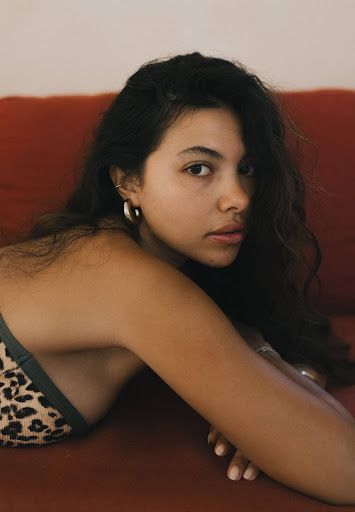
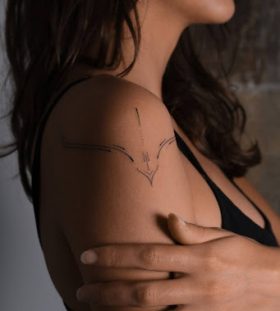
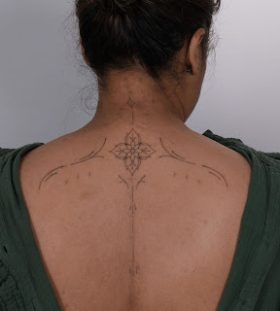
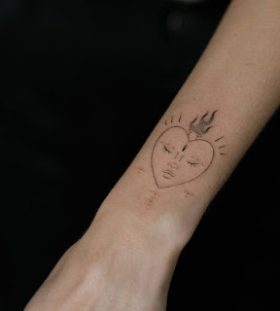
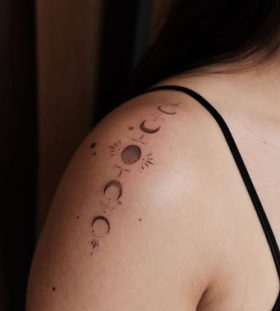
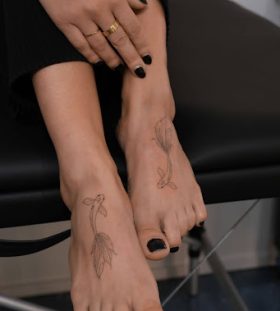
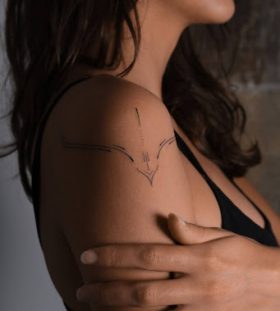
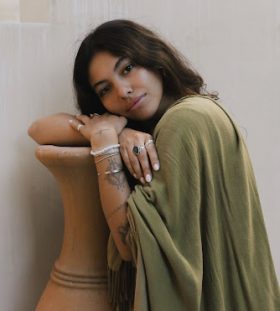
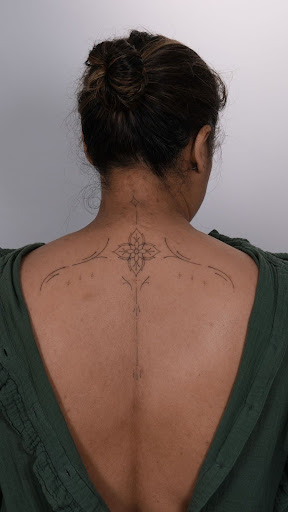
Tattoo artist Mar Gaziano is a traveling handpoke specialist whose work moves between Latin America and Europe. Tattooing for more than four years, she has built an international client base while working across countries such as Mexico, Switzerland, and Germany. Known for her ornamental handpoke designs composed of symbols, shapes, and intuitive forms, Gaziano approaches tattooing as a deeply personal exchange of energy between artist and client.
In a tattoo industry often driven by speed, machines, and competition, Mar Gaziano has chosen a quieter, more deliberate path. Working exclusively with the handpoke technique, she creates ornamental designs built from symbols, shapes, and intuitive forms that reflect both her inner world and the energy of the moment.
For Mar, tattooing is more than decoration — it’s a ritual of connection between artist and client.
We spoke with her about her journey into tattooing, the philosophy behind her work, and why she believes human-made art will become even more important in the future.
How did you get started in the tattoo industry?
My path into tattooing began quite unexpectedly. At the time, my ex-boyfriend was already learning to tattoo and had been practicing for over a year. I joined him on that journey, and he introduced me to the basics and fundamentals of the craft.
After learning the initial techniques, I continued developing my practice independently. I began exploring my own artistic direction and slowly started applying to tattoo studios in different places around the world. That process helped me gradually enter the industry and begin building my own place within it.
What inspired you to become a tattoo artist?
I had always been fascinated by tattoos and body art, but the moment that truly changed everything for me was when a friend gave me a handpoke tattoo.
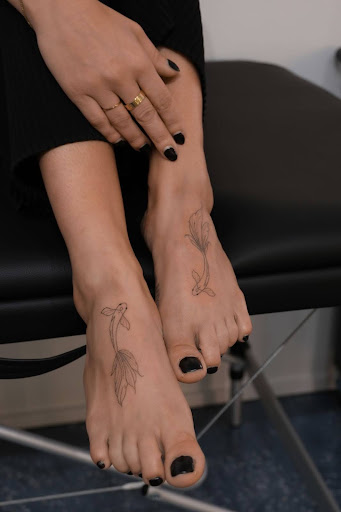
That experience felt very different from what I had imagined. The process was intimate, slow, and deeply human. I felt an immediate connection with the technique itself. From that moment, I knew I wanted to learn handpoke tattooing and start practicing it myself.
How would you describe your tattooing style?
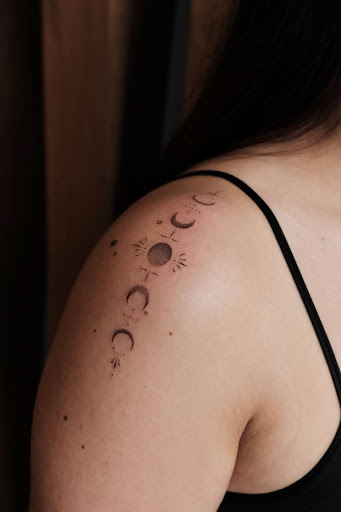
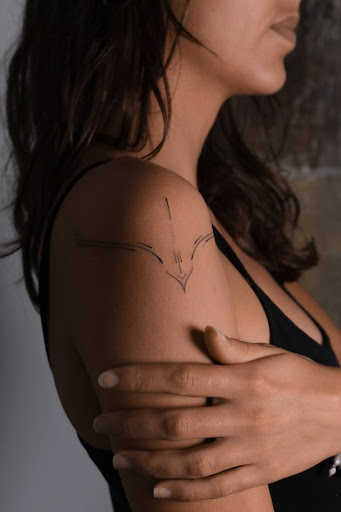
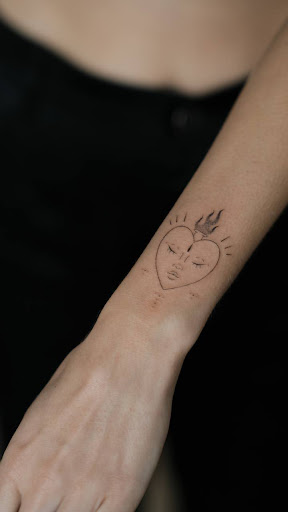
I work exclusively with the handpoke technique, which means every tattoo is created manually without a machine.
Most of my work is ornamental, but it’s composed of symbols, shapes, and designs that feel connected both to my inner world and to the universe around us. I see tattooing as an energetic exchange between myself and the person receiving the tattoo.
Each design reflects not only my own energy as an artist but also the atmosphere of the moment and the personality of the client. I find inspiration everywhere — in nature, emotions, and everyday life.
What are the biggest challenges you’ve faced as a tattoo artist?
The tattoo industry can sometimes be very competitive and full of ego. One of the biggest challenges for me was staying true to my technique and artistic direction.
Many studios encouraged me to switch to machine tattooing, but I felt strongly about continuing with handpoke. I wanted to prove that this technique can be just as professional and respected within the industry.
It took time and persistence to be taken seriously, but I remained committed to my path.
How has the tattoo industry changed since you started?
The world is changing very quickly, and tattooing naturally reflects those shifts. Some people feel that the industry is currently declining, but I see it more as part of a cycle.
Everything moves in cycles.
With the rise of artificial intelligence and new technologies, I actually believe that human-made art will become even more valuable. Tattoos are something deeply human — they come from the body, the hand, and the connection between people.
Tattooing has existed for thousands of years, long before Christ, and has been respected across many cultures. Because of those deep historical roots, I believe tattooing will continue evolving but will never disappear.
Our responsibility as artists today is to adapt to change rather than resist it. Instead of feeling like victims of transformation, we can use it as a force that pushes creativity forward.
What’s the most meaningful tattoo you’ve ever done?
The most meaningful tattoo I’ve ever done was the one I gave to my grandmother when I was just beginning to learn.
Technically, it’s not the most perfect tattoo I’ve made. But the fact that she trusted me with her skin for her first and only tattoo meant everything to me.
There was no judgment from her — only trust. And she still loves the tattoo.
Do you have a favorite tattoo you’ve created?
I don’t think I could choose just one.
I like most of the tattoos I make because each one carries meaning for the person receiving it. And since I’m constantly creating new work, the list of favorites keeps changing all the time.
If you could tattoo only one design for the rest of your life, what would it be?
Probably stars.
I love tattooing them because they are delicate and simple, but also full of symbolism. Stars often represent guidance, dreams, and our connection to the universe. There’s something about tattooing them that brings me a lot of pleasure during the process.
Have you ever turned down a tattoo request?
Yes, quite often.
If a request doesn’t align with my artistic language or style, I prefer not to do it. I also refuse when someone asks me to copy another artist’s work exactly.
Sometimes I even know the artist whose work they want to copy, so instead I simply recommend that they go directly to that person.
How do you work with clients who are unsure about their design?
I’ve noticed that there are generally two types of clients.
The first type doesn’t know exactly what they want but trusts my work and my creative process. With them, the collaboration usually flows very naturally.
The second type also likes my work but wants to maintain full control over the design and sometimes doubts their own decisions. With those clients, I try to be patient and collaborative. We explore ideas together and adjust the design as many times as needed until they feel truly comfortable.
In the end, they always leave happy with the final result.
If you weren’t a tattoo artist, what would you be doing?
I really enjoy connecting with people. If I weren’t tattooing, I would probably dedicate myself fully to my other profession, which is teaching yoga.
I would focus on leading classes and organizing retreats. In a way, both tattooing and yoga allow me to create meaningful experiences with others — just from different perspectives.
What’s a common misconception people have about tattoo artists?
There are many stereotypes about tattoo artists.
Some people imagine we are rebellious, lazy, or connected to drugs. Others assume that tattooing doesn’t require real skill or discipline.
In reality, most professional tattoo artists I know are extremely hardworking and deeply dedicated to their craft. They respect their work and their clients.
Part of our role as artists is to slowly break those stereotypes and show the real value of tattooing as an art form.
What’s something about the tattoo industry outsiders might not expect?
Many people don’t realize that tattooing can actually be a sustainable profession.
For me, it’s a career that offers freedom. It allows me to travel, organize my own schedule, and connect with people from different cultures and places.
Tattooing may have had a complicated reputation in the past, but today it’s clearly recognized as a form of art. And within the industry there are many humble, talented, and inspiring people.
How do you feel about tattoo conventions?
Personally, I feel a bit disconnected from tattoo conventions.
Many of them revolve around competition, and for me art isn’t about competing with others. I prefer calmer environments where the process of tattooing feels more intimate.
That said, I respect that conventions are very important for many artists. It’s simply not the environment where I feel most comfortable working.
Follow Mar Gaziano’s work on Instagram: @sagradaink